Last updated: April 28, 2026
- Office established: 1820, with the appointment of James Jones as first sheriff
- Headquarters: 5 N. Oak Avenue, Jasper, Tennessee
- Current sheriff: Ronnie "Bo" Burnett (first elected 2002; not seeking re-election in 2026)
- County jail: Marion County Adult Detention Center, built 1984, capacity 118
- Judicial district: 12th Judicial District of Tennessee
The sheriff of Marion County is the county's chief law enforcement officer, responsible for attending the courts, serving warrants and civil processes, keeping the peace, and operating the county jail. The office dates to 1820, when James Jones was appointed as the first sheriff after the county's creation in 1817 and the establishment of Jasper as the county seat. Since then, more than forty men have held the office across more than two centuries of county history.
The sheriff's role in Marion County has reflected the broader currents of the county's life: frontier order-keeping in the 1820s, the breakdown of civil authority during the Civil War, Reconstruction-era transitions, the industrial-era challenges of coal camps and foundry towns, the Prohibition-era violence that culminated in the 1927 Christmas Night Shootout, and the modern professionalization of county law enforcement. The roster of sheriffs preserved on the TNGenWeb Marion County officials list, compiled by Euline Harris and covering 1820 through 1995, is the most complete publicly available record of the office's history.
The first sheriffs (1820s to 1850s)
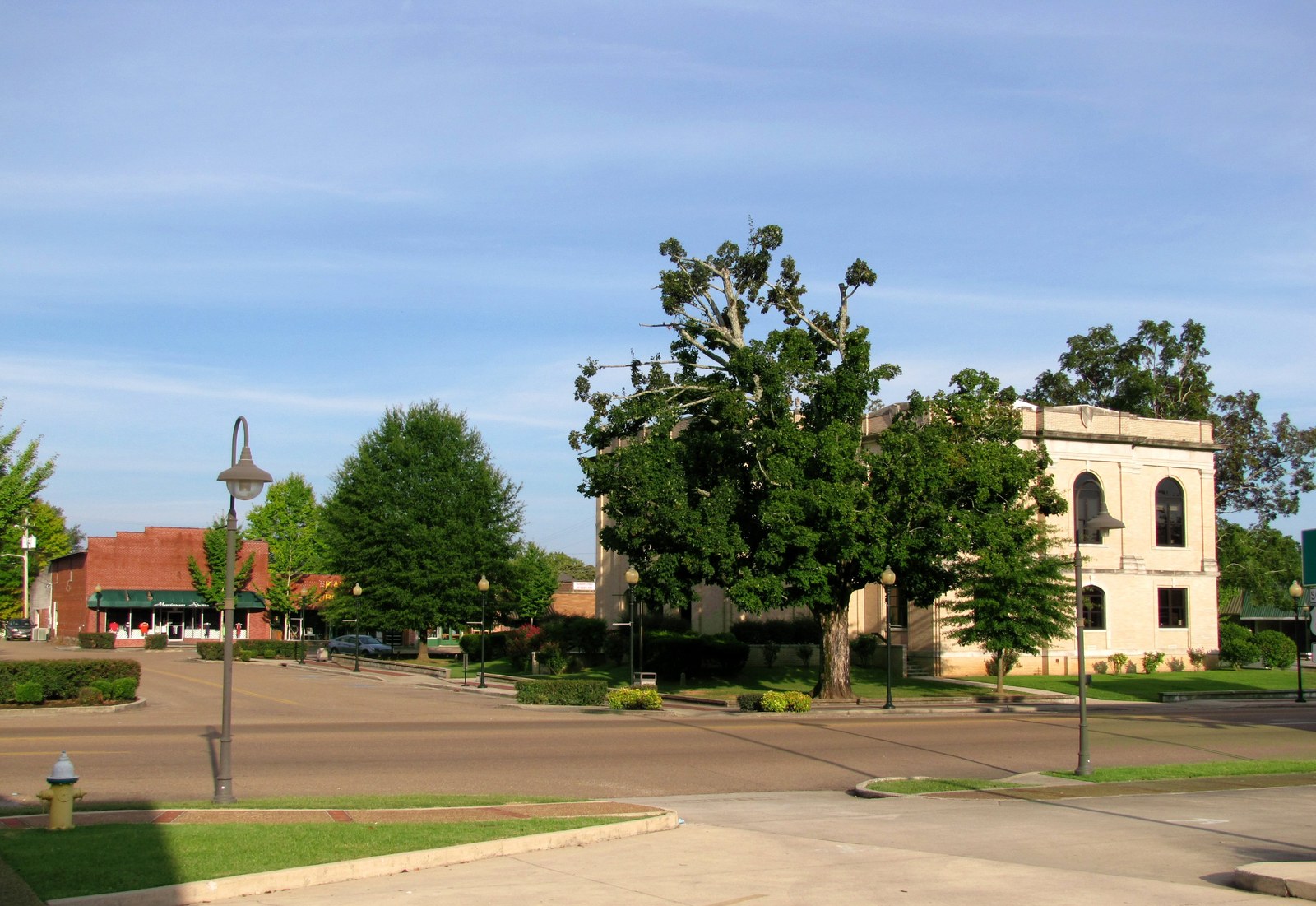
James Jones appears in the 1820 Marion County officials roster as the county's first sheriff, serving alongside Amos Griffith (Register), Jesse Beene (Circuit Court Clerk), and John Kelly (Clerk of the Court). These four men constituted the first slate of county officers after Marion County's formal organization. The contemporary Goodspeed's History of Tennessee (1886) does not include a biography for Jones, and no biographical detail beyond his name and office survives in the available records.
The officials list records only a few sheriffs by name in the early decades. Raphael Shelton served in 1842, and A. M. Stone served from 1852. Pleasant M. Pryor, listed as sheriff in 1858, shared a surname with the Pryor family whose name recurs throughout Marion County civic and educational history: Jackson Pryor founded the Pryor Institute at Jasper, and the Pryor surname appears across the county's land records, school rosters, and officials lists for more than a century. S. A. Rogers succeeded Pryor in 1859, serving on the eve of the Civil War.
Civil War and Reconstruction
Marion County's location on the Tennessee River made it a contested zone during the Civil War. Normal civil government, including the sheriff's office, was disrupted for much of the war. Both Union and Confederate forces occupied different parts of the county at different times between 1862 and 1865, and the courthouse at Jasper itself changed hands repeatedly.
During Reconstruction, D. M. Ketcham served as sheriff in 1868. His name appears in the same period as a broader reshuffling of Marion County officeholders. In 1874 A. P. Ramsey held the office, followed by Wash McCurry in 1876 and T. P. Hall in 1877. The rapid turnover of sheriffs in this period reflects the political instability of Reconstruction-era Tennessee, where county offices changed hands frequently amid factional disputes and shifting voter access.
The industrial era (1880s to 1910s)
The arrival of the railroad, the coal mines, and the South Pittsburg foundries in the 1870s and 1880s transformed Marion County from a rural farming county into an industrial one. The sheriff's duties expanded to cover the coal camps on Walden Ridge and the company towns along the river.
George B. Smith served as sheriff in 1881, followed by William Rankin in 1884. The 1886 Goodspeed biographical volume provides the most detailed portrait of any 19th-century Marion County sheriff in the person of John Sexton, elected sheriff on the Democratic ticket in 1886. Sexton was born October 3, 1843, in the Sixth District of Marion County, a son of Joseph and Martha Jane (Higdon) Sexton. His family had roots in Polk County, Tennessee, and moved repeatedly between Marion County, Hamilton County, and northern Alabama before settling permanently in the Sixth District.
Sexton enlisted in October 1862 in Company H of the Fourth Georgia Confederate Cavalry and served as sergeant, then as a courier on General D. H. Hill's staff and with General Walker's escort. He fought at Chickamauga, served through the Atlanta campaign, and was at the battles of Franklin and Nashville. After the war he returned to Marion County with, as Goodspeed recorded, "nothing left but a poor horse and a ragged uniform." He rebuilt through farming and timber work, married Mary Hartman in 1867, and by the mid-1880s was one of the "prosperous and well-to-do citizens of the community." His two-year term as sheriff was the capstone of a civic career built on postwar recovery.
John Raulston succeeded Sexton in 1888, sharing a surname with the Raulston family long established in the Sequatchie Valley. Specific kinship between Sheriff Raulston and other Marion County Raulstons of the period is not documented in the available records.
The turn of the century brought rapid turnover: D. D. Rogers served in 1892 and again in 1896, J. R. Jones in 1894, and R. J. Brown from 1898 through 1900. The 1900 roster lists two sheriffs, Brown and F. McCullough, suggesting a mid-term transition, possibly a resignation or death in office. McCullough continued as Frances McCullough in 1902. William J. Harris served in 1904, H. M. Westmoreland in 1906, and W. A. Cantrell from 1910 through at least 1914.
Prohibition, the Coppingers, and the Christmas Night Shootout

The Prohibition era brought its own enforcement challenges. Moonshine production was widespread in the coves and on the plateau, and the sheriff's office was the front line of both alcohol enforcement and the industrial labor disputes that roiled South Pittsburg's foundries in the 1920s.
George Washington "Wash" Coppinger, born October 1, 1859, into the Coppinger family of Coppinger Cove, first appeared on the officials list as sheriff in 1918. He served through the early 1920s (the 1922 roster lists both Coppinger and John H. Belk, again suggesting a mid-term handoff) and was re-elected in 1926. By the mid-1920s, Coppinger was the central law enforcement figure in Marion County during a period of acute industrial tension.
On December 25, 1927, Sheriff Coppinger was killed in the Christmas Night Shootout at Cedar Avenue and Third Street in South Pittsburg. The shootout erupted from a long-running labor dispute at the H. Wetter Manufacturing Company foundry. Per the verbatim text on the Tennessee Historical Commission marker (THC 2B-32) dedicated in 2014, the six officers who died were Sheriff Coppinger; Deputy Lorenza A. Hennessey; City Marshals Benjamin Parker and Ewing Smith; Wetter guard Oran H. Larowe; and Police Chief James Connor, who died the next day. It was the deadliest single incident in the history of Marion County law enforcement.
The day after his father's death, Turner Coppinger, who had been serving as chief deputy, was unanimously elected sheriff by the Marion County Court at Jasper. He was sworn in by County Court Clerk W. T. Hornsby (per the contemporary South Pittsburg Hustler account preserved in the Christmas Night Shootout documentation) and took charge of the office immediately. The officials list records T. E. Coppinger as sheriff in 1928 and 1934; whether this is Turner or another Coppinger family member is not specified in the available records. The Coppinger family's association with Marion County law enforcement thus spanned at least a decade through some of the county's most turbulent years.
Between the Coppingers, A. G. Holloway appears in 1924 and Ben Parker in 1925. Parker's presence on the sheriff's roster is notable: Benjamin Parker later served as a special policeman in South Pittsburg and was among the six officers killed in the 1927 shootout. The Christmas Night Shootout page covers the political backdrop, including Parker's loss to Coppinger in the 1926 sheriff's race and his subsequent appointment as a city marshal.
Depression through mid-century (1930s to 1960s)
The post-Coppinger years saw continued turnover. Jackson Tate served in 1930, C. L. Coffelt in 1932, T. E. Coppinger returned in 1934, and S. E. Beene held office in 1938. The Beene surname connects to one of Marion County's earliest civic families: Jesse Beene was the first Circuit Court Clerk in 1820.
During World War II, Homer Dawson served as sheriff from at least 1942 through 1945, a period when many Marion County men were in military service and the home front presented its own challenges. E. D. Martin succeeded Dawson in 1946, Milt Hudson served from 1950, and Nelson Van Hooser from 1954.
The longest-serving sheriff of the mid-20th century was Johnny Mathews, who first appeared on the roster in 1956 and served through at least 1960 (with a listing also in 1958). Mathews's tenure as sheriff spanned a period of significant change: the 1950s school- consolidation era, the beginnings of the civil rights movement, and the early Interstate highway construction that would reshape the county's geography. After leaving the sheriff's office, Mathews transitioned to the Register of Deeds office, where he served from 1970 through at least 1986, giving him a combined public career of roughly thirty years across two county offices.
Leslie C. Lawhorne served in 1968. Ernest Haskew followed in 1970 and would return to the office in 1990, bookending a career that touched two decades of Marion County governance.
Modern era (1970s to the present)
Lloyd Hood served four terms as sheriff, appearing on the roster in 1974, 1978, 1981, and 1982, making him one of the longest-serving sheriffs in the county's history at that point. His tenure coincided with the professionalization of Tennessee law enforcement in the 1970s and 1980s, including the establishment of training standards through the Tennessee Law Enforcement Training Academy (TLETA).
Johnny Uselton served in 1986. The 1990 roster lists both Roger Webb and Ernest Haskew, and Jim Webb appears in 1995, forming another family connection in the sheriff's office. The TNGenWeb officials list, compiled by Euline Harris and last updated June 18, 2004, ends its coverage at 1995.
Ronnie "Bo" Burnett was first elected sheriff in 2002 and has served continuously since. Per the sheriff's office administration page, Burnett began his law enforcement career in 1979 with the Jasper Police Department, served with the South Pittsburg Police Department from 1985, returned to Jasper PD in 1998, and graduated from the Tennessee Law Enforcement Academy in 1981. His tenure of more than two decades is the longest in the recorded history of the office.
The director of the 12th Judicial District Drug Task Force, which serves Marion County alongside Bledsoe, Rhea, Sequatchie, Grundy, and Franklin counties, was terminated on May 31, 2021. An April 2025 investigation by the Tennessee Comptroller's Office of Local Government Audit, working in conjunction with the Tennessee Bureau of Investigation, found that former director Cody Smith had misappropriated at least $7,246 in confidential and seized funds between 2017 and 2021. Smith subsequently pleaded guilty to two counts of possession of methamphetamine with intent to resell. Sheriff Burnett was not a target of the investigation.
Burnett announced in early 2026 that he would not seek re-election as sheriff, opting instead to run for county commission. The May 2026 Republican primary features several candidates for the open seat. Among them are Anthony Gamble, a 32-year veteran of Marion County law enforcement; Chris Webb, who began his career at the Marion County Sheriff's Office in 1993 and later served at the Kimball Police Department; Dale Winters, a school resource officer at Marion County High School; Clifford Wayne Jordan, a former South Pittsburg police chief; and Billy Mason, a former Jasper police chief.
The county jail
The Marion County Adult Detention Center in Jasper was built in 1984 and has a capacity of 118 inmates. It is classified as a minimum-security facility operated by the sheriff's office. The history of earlier jail facilities in the county is not well documented in surviving records; the 19th-century jail would have been located near the courthouse on the Jasper square, as was standard in Tennessee county seats of that era.
Town police departments
Beyond the sheriff's office, several Marion County municipalities maintain their own police departments. The towns of Jasper, South Pittsburg, Whitwell, and Kimball have each operated police forces at various points in their history. During the industrial era, company towns like Richard City also employed their own security and law enforcement: the Dixie Portland Cement Company's early operations included commissioned deputies to keep order in the company town.
The relationship between county and municipal law enforcement in Marion County follows the standard Tennessee model: the sheriff has countywide jurisdiction, while municipal police departments handle routine enforcement within their town limits. The sheriff's office also serves as the primary law enforcement agency for unincorporated areas of the county, which include much of the plateau, the coves, and the rural Sequatchie Valley.
The complete sheriff roster (1820 to 1995)
The following roster is drawn from the TNGenWeb Marion County officials list, compiled by Euline Harris and published in 2004. The years listed are election or appointment years as recorded on the source; not all terms can be precisely dated. Dual listings in a single year (as in 1900 and 1922) reflect mid-term transitions, the specific causes of which the source does not record.
| Year(s) | Sheriff | Notes |
|---|---|---|
| 1820 | James Jones | First sheriff of Marion County |
| 1842 | Raphael Shelton | |
| 1852 | A. M. Stone | |
| 1858 | Pleasant M. Pryor | Pryor family; pre-Civil War |
| 1859 | S. A. Rogers | |
| 1868 | D. M. Ketcham | Reconstruction era |
| 1874 | A. P. Ramsey | |
| 1876 | Wash McCurry | |
| 1877 | T. P. Hall | |
| 1881 | George B. Smith | |
| 1884 | William Rankin | |
| 1886 | John Sexton | Confederate veteran; Goodspeed biography |
| 1888 | John Raulston | Possibly related to Judge John T. Raulston |
| 1892 | D. D. Rogers | |
| 1894 | J. R. Jones | |
| 1896 | D. D. Rogers | Second term |
| 1898, 1900 | R. J. Brown | |
| 1900 | F. McCullough | Also listed 1900; mid-term transition |
| 1902 | Frances McCullough | |
| 1904 | William J. Harris | |
| 1906 | H. M. Westmoreland | |
| 1910, 1914 | W. A. Cantrell | |
| 1915 | J. M. Kelly | Kelly family |
| 1916 | M. F. Jackson | |
| 1918, 1922, 1926 | G. W. "Wash" Coppinger | Killed Dec. 25, 1927 |
| 1922 | John H. Belk | Also listed 1922; mid-term transition |
| 1924 | A. G. Holloway | |
| 1925 | Ben Parker | Later killed in 1927 shootout |
| 1928, 1934 | T. E. Coppinger | Coppinger family; possibly Turner Coppinger |
| 1930 | Jackson Tate | |
| 1932 | C. L. Coffelt | |
| 1938 | S. E. Beene | Beene family |
| 1942, 1945 | Homer Dawson | World War II era |
| 1946 | E. D. Martin | |
| 1950 | Milt Hudson | |
| 1954 | Nelson Van Hooser | |
| 1956, 1958, 1960 | Johnny Mathews | Later Register of Deeds 1970-1986 |
| 1968 | Leslie C. Lawhorne | |
| 1970, 1990 | Ernest Haskew | Two non-consecutive terms |
| 1974, 1978, 1981, 1982 | Lloyd Hood | Four terms |
| 1986 | Johnny Uselton | |
| 1990 | Roger Webb | Also listed 1990 with Haskew |
| 1995 | Jim Webb | Webb family |
| 2002 to present | Ronnie "Bo" Burnett | Not seeking re-election in 2026 |
Related pages
- The Marion County Courthouse – two centuries on the Jasper square
- Elections and County Commission – the county judge, county executive, county mayor, and legislative body
- Town Governments – mayors and boards of the county's incorporated towns
- The Christmas Night Shootout (1927) – the deadliest incident in Marion County law enforcement history
- County Formation (1817) – the creation of the county and its first officials
- Jasper – the county seat and sheriff's headquarters
- Labor History – industrial-era law enforcement and labor disputes
- Prohibition Era – moonshine enforcement and Prohibition-era violence
- Sheriff G. W. "Wash" Coppinger – profile on the People page
Sources
- Marion County Officials (1820-1995) – RootsWeb / TNGenWeb Marion County (compiled by Euline Harris, 2004)
- Goodspeed's Biographies of Marion County, Q-S (1886) – RootsWeb / TNGenWeb Marion County (John Sexton biography)
- Marion County – Tennessee Encyclopedia
- Marion County Sheriff's Department (official website)
- Administration – Marion County Sheriff's Department
- Sheriff's Office – Marion County Mayor's website
- Anthony Gamble Announces Candidacy for Marion County Sheriff – Chattanoogan.com (Jan. 6, 2026)
- DECISION 2026: What's on the ballot in Marion County? – Local 3 News
- Christmas 1927 Labor Dispute Presentation – South Pittsburg Historic Preservation Society (legacy site)
- County and Municipal Officials – Marion County TN Election Commission