Last updated: April 23, 2026
Education in Marion County has moved through several distinct phases: the county academy system authorized by the state legislature in the 1820s, private antebellum academies and co-educational institutes through the late 19th century, company-town schools tied to the coal and cement industries, a segregated dual system anchored by a Rosenwald-funded Black high school that served two states until a 1965 fire forced integration, and the modern Marion County Schools district alongside the separate Richard City Special School District. Marion County holds a unique distinction in Tennessee athletics: it is the only county where every high-school football program has won a TSSAA state championship, with a combined 14 titles across its three schools.
This section covers the schools themselves, the athletic programs that made the county the only all-champion county in the state, the rivalry that ran for 97 years between Marion County High and South Pittsburg, the district structures that govern Marion County Schools and the independent Richard City Special School District, and the recurring consolidation debate over whether the county should operate one high school instead of three. The pages are organized by era (early academies, current high schools, Richard City Special School District, segregation era, historical schools), by institution (athletics, rivalry), and by governance (district structure, consolidation debate).
Early Academies
Under Tennessee's 1806 Cession Act framework, each county was expected to reserve land for an academy, though a public common-school system did not arrive until after the 1834–1835 constitutional reforms. In Marion County, the state legislature chartered Sam Houston Academy as the county academy in 1826. Private institutes, led by the Pryor Institute, then dominated Jasper's educational landscape through the early 1900s, when public high schools replaced the academy model.

Sam Houston Academy (est. 1826)
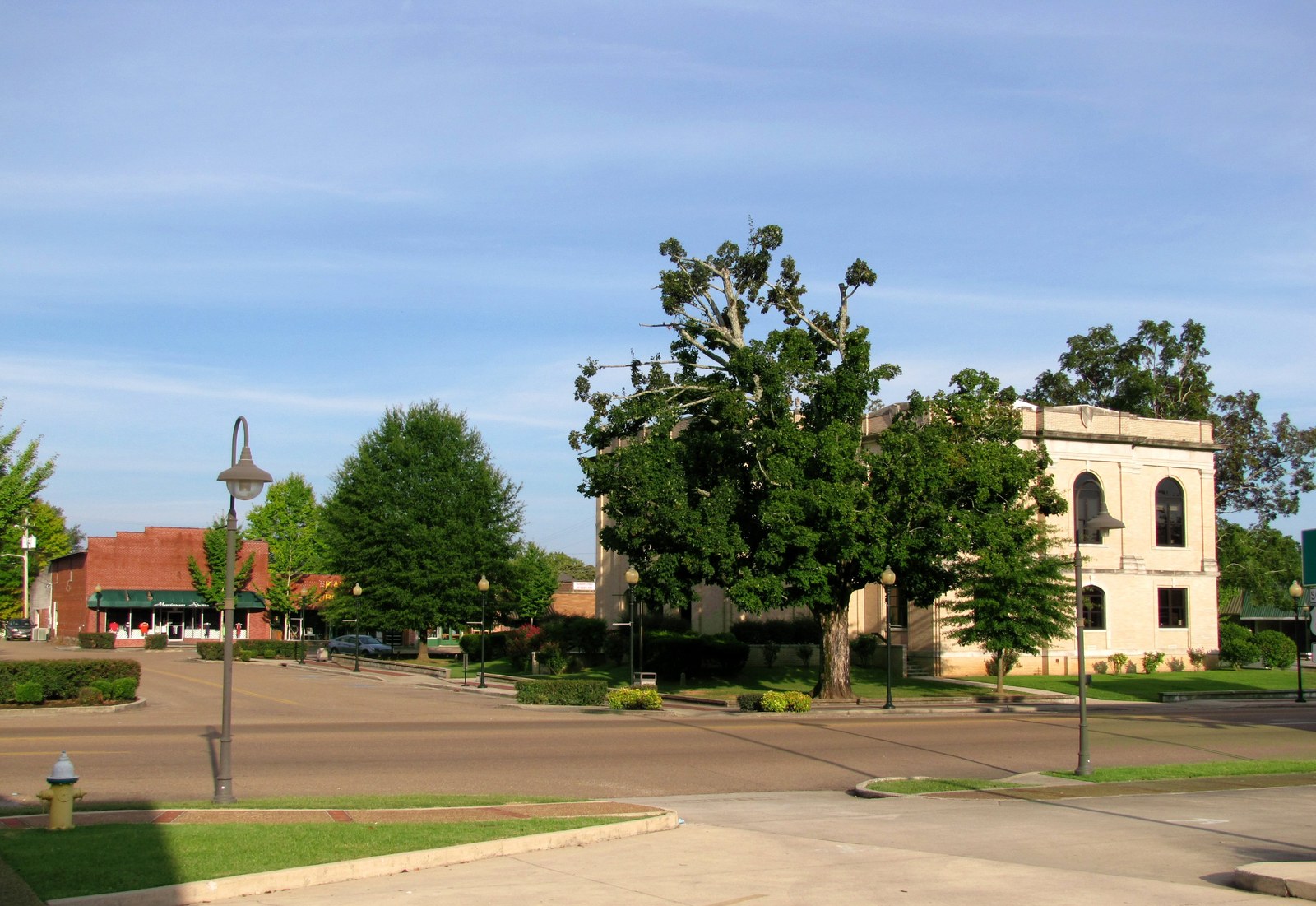
Marion County's first county academy, chartered by the legislature in 1826. The 1857 Greek Revival building on Academy Street served as a Civil War hospital and today houses Olive Branch Masonic Lodge #297.
Pryor Institute (c. 1889–1910)
A co-educational private institute on College Street, founded by Jackson Pryor, Washington Pryor, and Col. A. L. Spears. The largest school in the Sequatchie Valley; its building became Marion County High School in 1910.
Current High Schools (Marion County Schools)
The modern Marion County Schools district operates three high schools, each anchored in a different community. Together they serve roughly four thousand students across the county, along with their elementary and middle-school feeders. All three football programs have won TSSAA state championships: Marion County (five titles), South Pittsburg (eight), and Whitwell (one).

Marion County High School (Jasper)
Opened 1910 on the grounds of the former Pryor Institute. Home of the Warriors, with five TSSAA football state championships (1990, 1992, 1994, 1995, 2024).

Whitwell High School
Home of the Tigers in the coal-country Sequatchie Valley. 2018 TSSAA Class 1A state football champions; its middle-school feeder is internationally known for the Paper Clips Project.
South Pittsburg High School
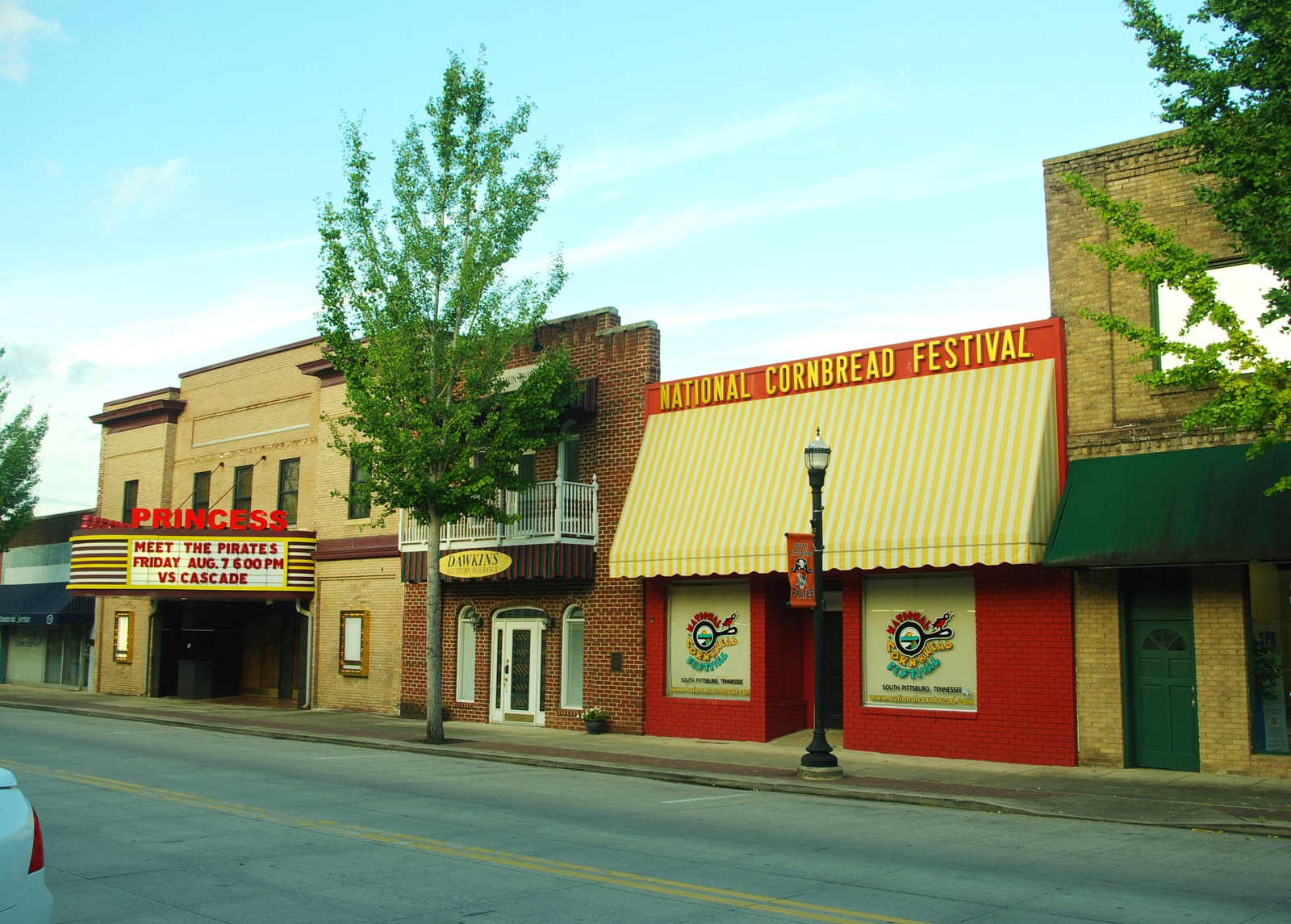
Established 1924 in the new Cedar Avenue brick school. Home of the Pirates, with eight TSSAA football state championships, one of the most decorated small-school programs in the state.
The Richard City Special School District
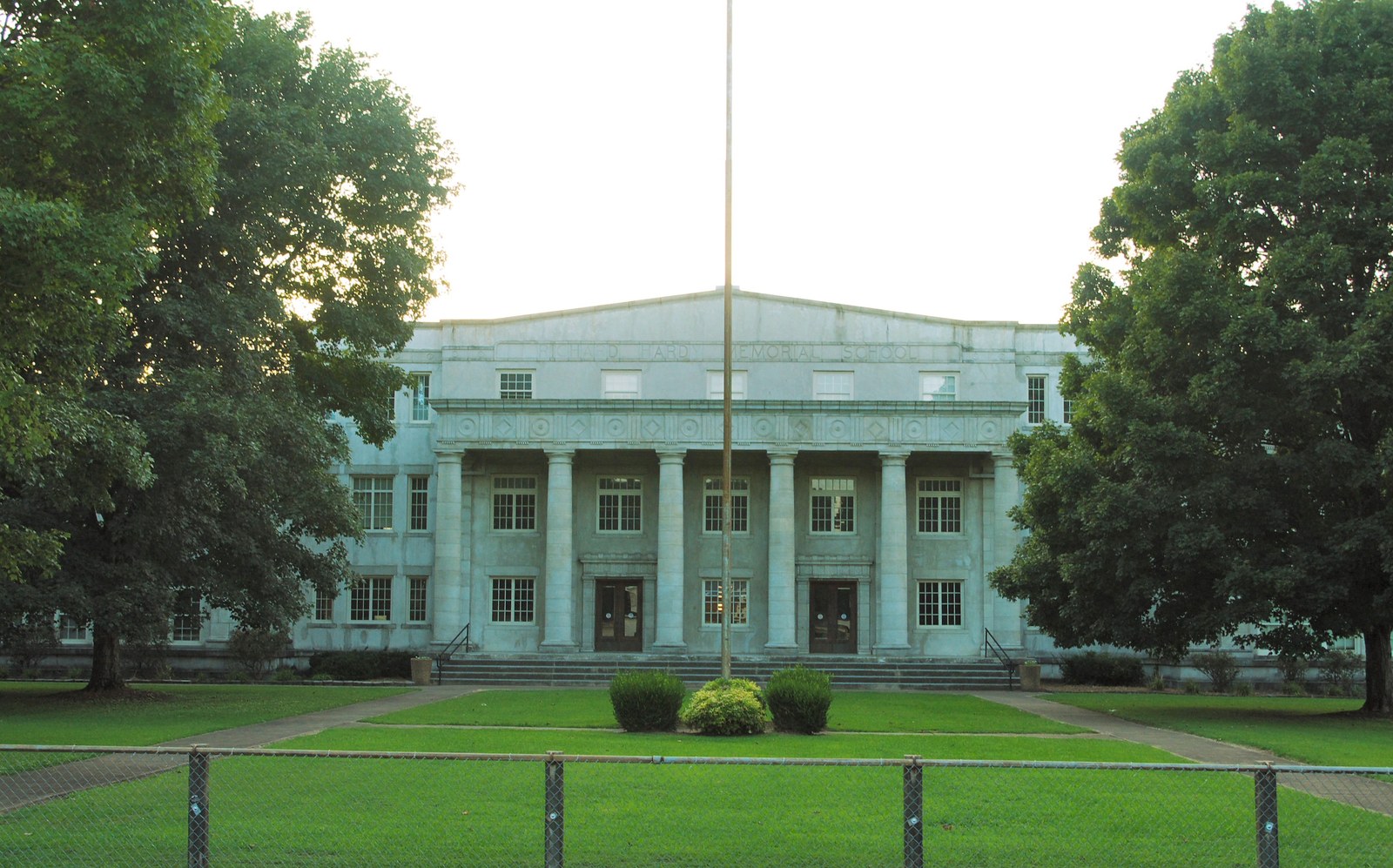
Richard Hardy Memorial School is the only school in the Richard City Special School District, separate from Marion County Schools. It is also the county's most unusual school: built largely of the Dixie Portland Cement Company's own product, opened in 1926 as the Dixie Portland Memorial School in honor of employees who served in World War I, and renamed the following year after the death of company president and former Chattanooga mayor Richard Hardy. The school still operates as PreK–12 at the edge of South Pittsburg.
Richard Hardy Memorial School
Built of Dixie Portland cement in 1925–1926 as a World War I memorial. A PreK–12 school in the Richard City Special School District.

Richard City (company town)
The Dixie Portland Cement company town that grew around the plant and the school.
The Segregation Era
During Jim Crow, Black students in Marion County were served by a separate system anchored by McReynolds High School in South Pittsburg. Organized in 1917 by a committee under Brown McReynolds, with members including Dr. W. J. Astrapp, Dennis Martin, and Arthur Haywood, it opened in rented space in 1918, lost its first building to fire in 1919, and was rebuilt in 1921 as a 22-room school funded by the county, the Julius Rosenwald Fund, and citizen contributions. Builder S. W. Hogan constructed the school, and principal Merzellar M. Burnett led it for 25 years. McReynolds served Marion County and northern Jackson County, Alabama for nearly half a century. A fire of unknown origin destroyed the main building on July 28, 1965; after one final year in the 1949 gymnasium, the last class graduated in 1966 and the county's schools were integrated. The gymnasium itself was destroyed by arson between 2017 and 2018. See also the Black History of Marion County page for the broader context of Black education in the county, and the Civil Rights Era page for the desegregation story.
Rural & Historical Schools
Before mid-20th-century consolidation, Marion County was dotted with roughly 120 small community and one-room schools, from Aetna Mountain and Battle Creek to Sweden's Cove (Sweetens Cove) and Cheekville (renamed Whitwell in 1887). Most were absorbed into the modern district between the 1940s and 1960s as school buses replaced walking distances, and their buildings are either gone or repurposed. The historical record is best preserved through Nonie Webb's Old Schools, Teachers, & Students of Marion Co., Tennessee, the TNGenWeb Marion County schools pages, and local genealogical collections.
Marion Prep Academy, a K–12 alternative school in Jasper, closed in 2015. South Pittsburg's 1898 frame school on Cedar Avenue burned in 1931 while serving as apartments; its 1924 brick replacement was the first home of South Pittsburg High School.
Athletics
Marion County's small-town high-school athletic programs have produced 14 TSSAA football state championships across three schools: South Pittsburg (8), Marion County (5), and Whitwell (1). In December 2018, Whitwell's title gave the county a unique distinction: it is the only Tennessee county in which every public-school football program has won a state championship. A 97-year MCHS-SPHS football rivalry, Tennessee's second-longest continuous series, ran from 1924 to 2021 and inspired the book Eight Hateful Miles.
Marion County athletics
Fourteen TSSAA football state championships across three high schools; the only all-champion county in Tennessee; NFL and UFL alumni, Mr. Football winners, and the coaches who built the dynasties.
Marion County vs. South Pittsburg rivalry
Tennessee's second-longest continuous high-school football rivalry, 1924 to 2021. Eight hateful miles, 97 seasons, and a century of end-of-October weeks that defined Friday-night Marion County.
The Modern District
Marion County Schools today operates four elementary schools, two middle schools, three high schools, Central Prep Academy (an alternative program for grades 10–12), and Marion County Virtual. Total district enrollment runs around four thousand students across roughly a dozen schools. Richard Hardy Memorial, in the Richard City Special School District, operates independently. The three high schools have a combined enrollment of roughly 1,250 students: Marion County (491), South Pittsburg (420), and Whitwell (337). A long-running discussion has circulated about consolidating the three schools into a single new high school, with cost estimates in the seventy-to-one-hundred-million-dollar range; the proposal has not moved forward.
District governance
Marion County Schools and the Richard City Special School District: board structure, directors of schools, funding under Tennessee's TISA formula, and the 1926 special-district arrangement that keeps Richard Hardy Memorial independent.
The consolidation debate
The mid-20th-century consolidation that pulled 120 community schools into a single district, and the recurring 21st-century proposal to consolidate Marion County's three remaining high schools into one.
Sources
- Tennessee Encyclopedia — Marion County
- Tennessee Encyclopedia — Richard City
- Tennessee Encyclopedia — Elementary and Secondary Education
- Marion County Schools (district site)
- Marion County High School — History
- South Pittsburg Historic Preservation Society — Schools
- South Pittsburg Historic Preservation Society — McReynolds High School
- Tennessee State Library and Archives — Marion County Genealogical Fact Sheets
- Tennessee State University — School Desegregation Digital Collection
- Fisk Rosenwald Fund Collection — McReynolds
- TNGenWeb Marion County — Old Schools
- UT CTAS — Marion County Education/Schools Historical Notes